Insulated Flasks for Winter: Hot Chai on the Road, at Work and on Trips North
How vacuum flasks work, what size to choose, and how to use one for chai, soup and water on road trips to the northern areas, at the office or in cold Punjab mornings.
When winter arrives in Pakistan, flasks come out of the cupboard. Families driving to Murree, Naran or Swat pack a thermos of chai for the road. Office workers in Lahore and Islamabad carry hot tea to beat the fog. Night guards, students and anyone who leaves home early on a cold morning knows the comfort of a hot drink poured from a flask. A good insulated flask is one of the most useful things you can own in winter, and it works just as well for cold water in summer.
How a vacuum flask works
A vacuum flask has two walls, usually of stainless steel, with the air removed from the space between them. Heat travels poorly through a vacuum, so hot drinks stay hot and cold drinks stay cold. The idea was invented in the 1890s by the Scottish scientist James Dewar, which is why flasks are sometimes called Dewar flasks. The lid matters too: most heat escapes through the top, so a tight, well-sealed lid is as important as the walls.
Which size do you need?
350 to 450 ml: one or two cups, good for the office or a morning commute
600 to 800 ml: enough for two or three people, or one person for a long day
One litre or more: a family road trip or a picnic
A bigger flask is not always better. A half-empty flask loses heat faster than a full one, so choose a size you will fill.
Getting the most heat out of your flask
The simplest trick is to preheat it. Pour boiling water into the empty flask, close the lid and wait five minutes. Empty it and then add your chai. This warms the inner wall so it does not steal heat from your drink. Fill it as close to the top as is safe, and open it only when you are ready to pour. With these steps, many good flasks keep tea hot for six hours or more.
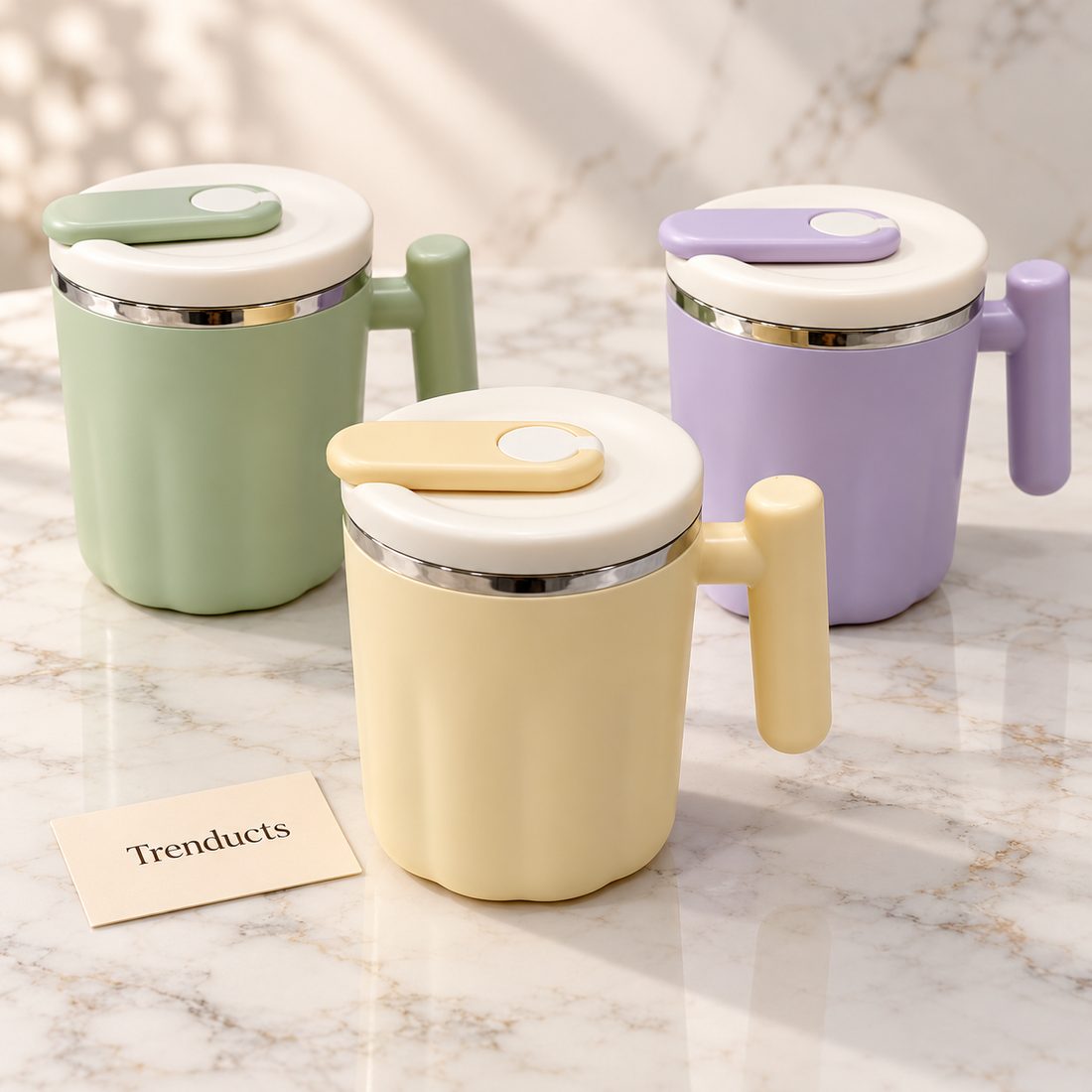
450ml Stainless Steel Insulated Thermos Mug with Lid and Handle (Random Color) (photo: Trenducts.pk)
Chai in a flask: a few tips
Milky chai can develop a stale taste if it sits too long. For long journeys, carry strong black tea in the flask and a small bottle of milk separately, then mix as you go. If you prefer doodh patti, make it slightly stronger than usual, since it continues to steep. Add sugar when serving rather than in the flask, so everyone can choose.
Not just for tea
Flasks are useful for much more than chai:
Soup or yakhni for a child's lunch on a cold day
Hot water for instant noodles or green tea on a trip
Warm milk for babies, if checked carefully before use
Ice-cold water or lemonade in summer
Use a wide-mouth food flask for soups, and do not put fizzy drinks in a sealed flask, as pressure can build up.
Safety points
Hot liquids cause burns, so keep flasks closed and out of reach of small children. Open the lid slowly and away from your face. If the outside of a flask becomes hot, the vacuum has probably failed and the flask no longer insulates well; replace it. Do not microwave a steel flask.
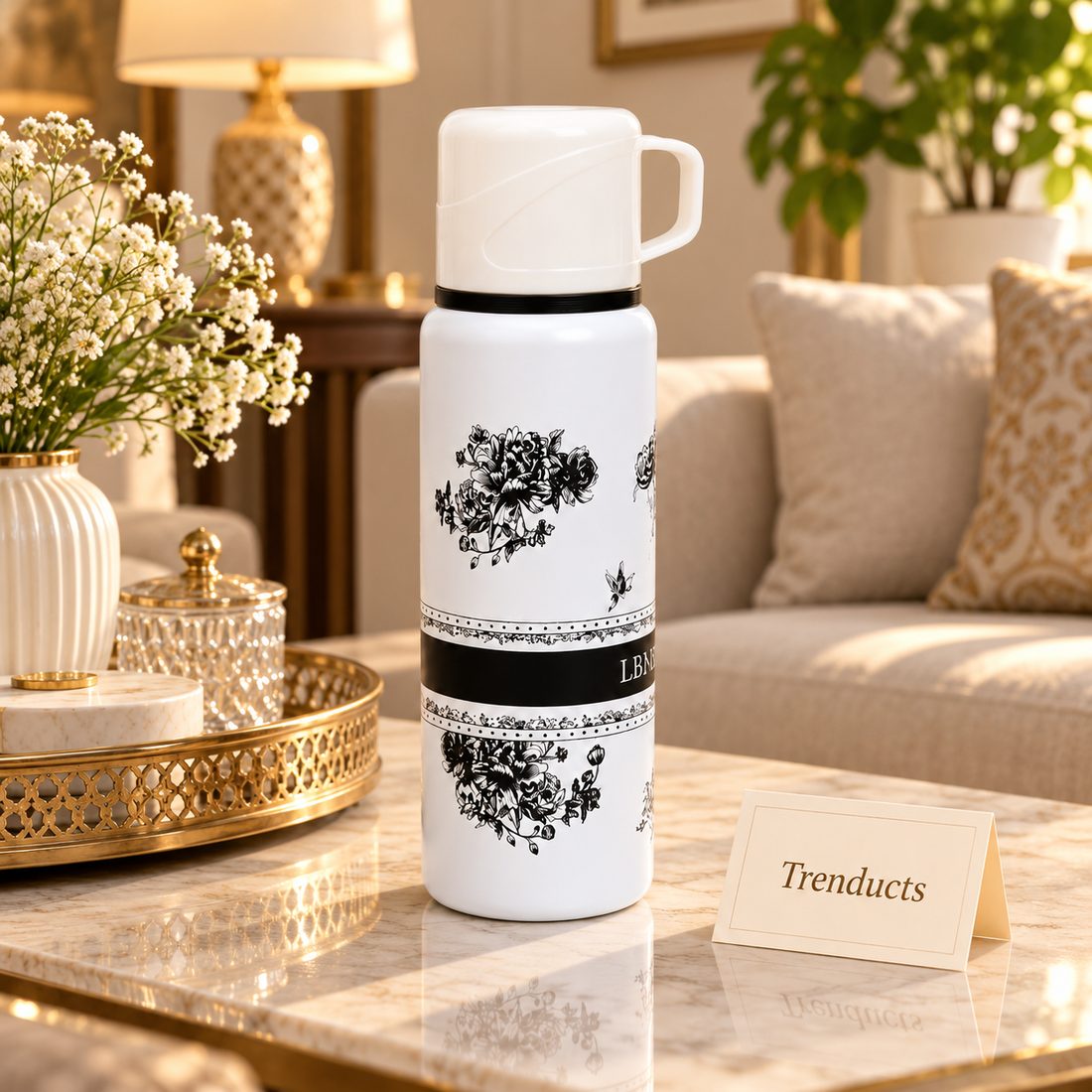
800ml Stainless Steel Vacuum Bottle with Cup Lid - Floral Print (photo: Trenducts.pk)
Cleaning and smells
Tea and coffee leave a brown layer and a smell over time. Fill the flask with hot water and a tablespoon of baking soda, leave it for an hour and then scrub with a long bottle brush. Remove the rubber seal from the lid and wash it separately, since that is where most smells hide. Dry the flask with the lid off.
A flask for every family member
Many families now keep one flask per person for the office, college and school, plus a large one for trips. Different colours or prints make it easy to know whose is whose.
Finding one
If you are preparing for a winter trip, you can compare insulated flasks and vacuum bottles in sizes from small travel cups to family bottles. A flask of hot chai on a cold mountain road is one of the simple pleasures of a Pakistani winter.
Choose a size you will use, preheat it, keep the seal clean, and it will serve you for many winters to come.